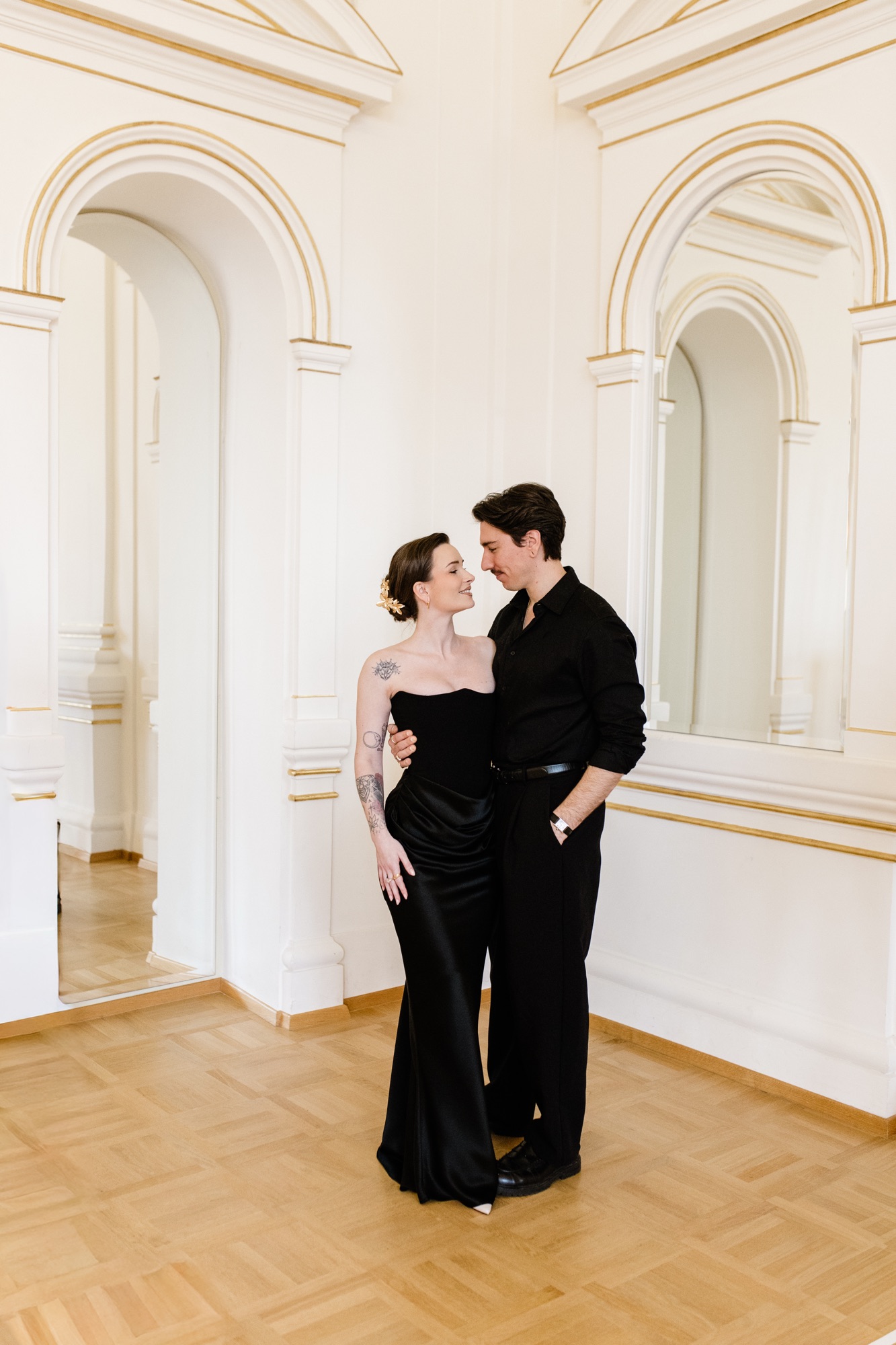
I have always found beautiful marriages more interesting than beautiful weddings. A wedding can be planned down to the smallest detail. You can choose the flowers, the dress, the location, the champagne, the music and the photographs, and for one day everything can look exactly as you imagined it. A marriage is different. Eventually, the flowers are gone, the dress is in the wardrobe and the two people are left with the much more ordinary question of how they are going to treat each other on a Tuesday evening when one of them is exhausted, something has gone wrong at work and neither of them particularly feels like being patient.
And in that moment is where a beautiful marriage is actually made. We talk about relationships as though the most important thing is finding the right person, which naturally matters, but finding someone you love is not the same thing as knowing how to be in a relationship with them. You can love someone deeply and still communicate badly. You can be completely attracted to someone and still make them feel lonely. You can have the same ambitions, the same taste, the same sense of humour and the same plans for the future, and still develop a relationship in which one person feels criticised while the other feels ignored.
Love gets you into the relationship. What you repeatedly do inside it determines what kind of relationship you actually have (yes, this means that the terrifying fact that love is not enough rings true). I’m interested in what happens in a marriage: the exchanges, reactions and patterns that develop when two people communicate with one another. What keeps happening between these two people, and how are both of them participating in the pattern? Our interactions can be observed and changed, and healthy relationships demand direct, conscious and effective communication.
In other words, a marriage is hard work, and relational competence is exactly why many marriages fail. Competence is something each individual brings to the table, and it is something that can be learned, not something most of us are born with. It takes effort and time to develop habits and patterns that make you competent to handle a relationship, and most people aren’t doing the work. Instead, they believe that compromising is a good long-term solution, when in reality a compromise is bullshit. It means neither party is happy with the outcome. A compromise is merely a temporary solution to a bigger problem that needs to be addressed sooner rather than later, not a strategy to indefinitely avoid conflict. This is where relationships require work in a way that people sometimes misunderstand. The work is not spending every Sunday afternoon having a serious conversation about your feelings. It is not analyzing every disagreement until both people are exhausted, or constantly trying to optimize your marriage as though it were another business project. The work is much more ordinary than that. It’s noticing what you do when you are disappointed, frightened, tired, jealous or angry, and becoming responsible for your part in it (yes, you’re looking at you, not at what your partner did to hurt you, but how you responded and why). It means learning that being upset does not automatically make you right, or that being criticized isn’t an attack. It is learning to say, “that hurt me (because of xyz)” rather than trying to make the other person hurt back. It is being able to hear, “I didn’t like the way you spoke to me,” without immediately taking on a defensive stance. It is being able to apologize without adding a “but”.
That last one is particularly important: a marriage becomes exhausting when every conflict turns into a negotiation over who is allowed to be wrong. Beautiful marriages have two people who can take responsibility without feeling that responsibility diminishes them. There is a huge difference between admitting that you handled something poorly and deciding that you are either a bad person or can do no wrong. The first creates room for change; the second two usually creates shame, defensiveness and another argument. A mature relationship needs enough security for both people to be able to say, “I got that wrong,” and enough generosity for the other person not to use the admission as an opportunity to humiliate them. This same principle applies to listening: most people think they are listening when they are actually preparing their response. Their partner is talking and they are already deciding whether they agree, whether the accusation is fair, what happened last Tuesday that proves their point, or what they are going to say next. Real listening is more uncomfortable because it requires you to let another person’s experience exist without immediately correcting it or reacting to it in any other way. You can disagree with someone’s interpretation and still accept that they feel the way they do (even if you don’t understand it, this is a big one). People love to package bad listening into “empathy” and “but I just want to help”. Stop “helping” to ease your own discomfort the conversation is causing you and start leaving space for your partner. That is real empathy. And exactly that distinction can change a marriage.
There is also a much simpler part of relationship psychology that Transactional Analysis calls “strokes”: recognition and acknowledgement between people. In ordinary language, this is the experience of being noticed, appreciated, thanked. Being touched affectionately and told that you look beautiful. Having your partner remember something that mattered to you and having your partner notice that you’re tired and make the evening a little easier without needing to be asked. TA treats these exchanges of recognition and an appropriate reaction to them as fundamental to human relationships, and the concept is closely related to ideas such as warmth, intimacy, belonging and social connection. I think this matters enormously in long-term relationships because familiarity can make people lazy.
Even if nothing dramatic has happened, the distance that we create by not actively nourishing closeness can be devastating because relationship becomes under-attended. A relationship needs recognition in the same way a house needs maintenance. You cannot spend ten years never cleaning anything and then be surprised that the house feels neglected. The same is true of intimacy; it’s built through hundreds of tiny moments that, individually, seem almost insignificant. A hand on someone’s back while walking through a restaurant. A message because you saw something they would like. Making their coffee without asking, sitting down together rather than both disappearing into separate screens and laughing about something that nobody else would understand. Telling your partner about a small victory before telling Instagram. Remembering that they have a difficult meeting tomorrow and asking how it went. These are the moments that matter, not grand gestures twice a year (these are usually just guilt for neglecting your partner the other 363 days of the year but that’s a topic for another time).
Then there’s the fact that sometimes your partner will bring out parts of you that you would rather not see. The person closest to you has access to your insecurities, your expectations, your fears and your old habits, which means they can accidentally touch something that existed long before they arrived. You may become controlling when you feel uncertain, and they respond with withdrawal because they feel threatened. You may become intimidatingly demanding when you need reassurance, and your partner could respond with sarcasm if the situation makes them feel powerless. Neither person necessarily wakes up thinking, “Today I would like to recreate an unhealthy relational pattern.” It simply happens because people tend to fall into familiar ways of responding under pressure. Transactional analysis would describe some of these recurring interactions as patterns or, in more specific circumstances, games: repetitive ways of interacting that appear to be about one thing, while accomplishing something else underneath – an ulterior motive, if you will. But the important part isn’t memorising this terminology, but rather recognizing that a couple can become very skilled at recreating the same conflict without ever consciously deciding to do so. And once you really see that, the question changes from “Why does my husband always do this?” or “Why does my wife always react like that?” to “What happens between us that keeps producing this result?”
Asking constructive questions gives both people somewhere to go. May that be changing your own side of a pattern. You can express your needs directly without playing a guessing game. You can refuse to participate in an argument that has become circular and instead say, “I think we’re doing that thing again,” and take a breath before continuing. You can learn what your partner looks like when they are overwhelmed, and they can learn what you look like when you are hurt. Over time, two people can become experts in each other without becoming prisoners of each other’s patterns. That, to me, is one of the most beautiful things about a long marriage: not that you always know what the other person needs, but that you have paid enough attention to become increasingly good at understanding them. Of course, none of this means a marriage should become a full-time psychological project, I actually believe the opposite to be true. A beautiful relationship needs an enormous amount of lightness. You need to laugh together and have ridiculous conversations and private jokes. You need to go somewhere for no reason other than that you want to, have dinners that turn into three-hour conversations, lazy mornings, shared obsessions, songs you both love and traditions that would make absolutely no sense to anyone else. You need sex, affection, flirting and the feeling that you are still two people who are attracted to one another, not simply two highly efficient people running a household. All of these things point to the North Star of each relationship: shared values. If your set of primary personal values isn’t aligned the relationship will not work, simple as that.
I find the idea that a successful marriage is simply one that has “good communication” absolutely lacking. Sure, communication is important, but a relationship is not a corporate meeting, and you’re not there to resolve problems and talk strategy. You are there to enjoy a person. A beautiful marriage needs friendship just as much as it needs communication. You need to actually like the person you have chosen, and take an interest in their mind, opinions, stories, in their ridiculous habits and the person they are becoming. You need to leave enough room for individuality that neither person feels they have disappeared inside the relationship. I think that a beautiful marriage really means becoming very good at being two people who have chosen the same team. That requires boundaries as much as closeness. A healthy relationship does not require constant agreement or proximity, but enough trust that difference does not automatically feel like rejection. This is where effort becomes particularly important. People sometimes hear the word “work” and imagine that I am describing a relationship that is difficult all the time, which couldn’t be farther from the truth. The best marriages can feel incredibly easy. They can feel like home and contain an enormous amount of peace; but that ease is not evidence that no work has been done. Quite the opposite, actually: it’s evidence that the work has been done so consistently that the relationship has developed a strong foundation. That kind of peace and ease is earned. Perhaps that is what I find most beautiful about a marriage. Ideally, you get to watch two people become increasingly fluent in one another.
A beautiful marriage is not two people who never have to work at being together, but two people who understand that something this important deserves their attention and effort. They keep choosing each other. The romance is not that it happened effortlessly, but rather that, after all the years and versions of yourselves you’ve had to become, you are still interested in building something beautiful together. And if you keep encountering the same patterns in your relationships (whether you’re struggling to communicate, repeating the same conflicts, becoming defensive, overgiving, withdrawing or simply wondering why something that should feel good has become so difficult) that is exactly the kind of thing I explore in Transactional Analysis counseling. Sometimes the most useful question is not “Who is wrong?” but “What keeps happening between us, and what could we do differently?”
You’re welcome to book an online or in-person (Ljubljana, Slovenia) 1:1 session with me via ninastanicdornik@gmail.com.
Dodaj odgovor