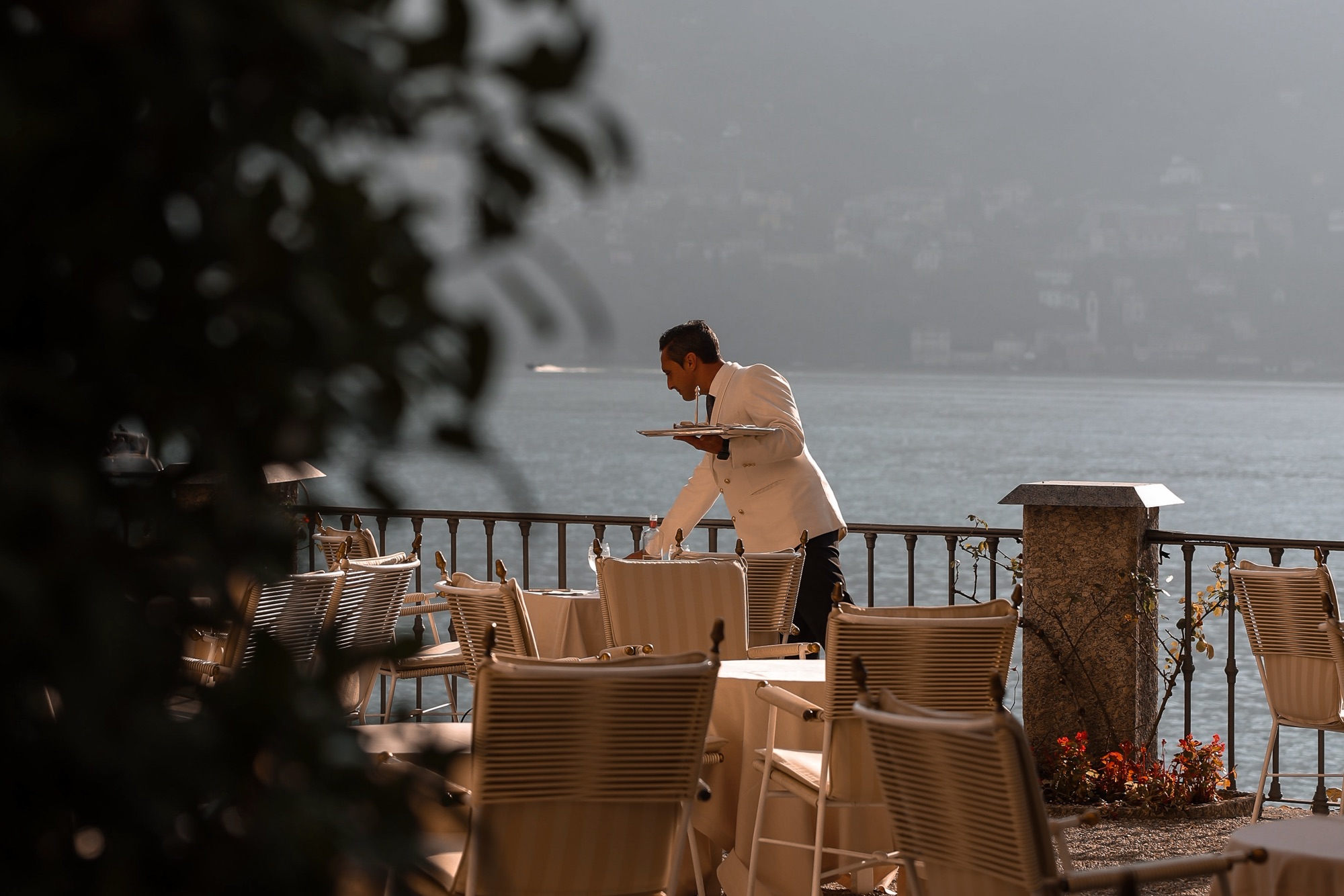
For a brief moment, the noise stills. The pace changes, and what I once believed a luxury becomes necessity. Spending some time at Villa d’Este this month has opened a new point of view for me: maybe speeding up is slowing down. Maybe time and space really are connected in a way I hadn’t thought about before; perhaps it’s not about how much time we have and what we do with it, but rather it’s about how we experience it. And I’m not talking about travel plans, spa days or time with family, but how our inner world reflects our surroundings, and vice versa. Maybe, just maybe, time is not an important measuring unit; could it be something that holds meaning only when truly experienced?


This quintessential lake Como villa, synonymous to luxury hospitality, has a rich history. Over five centuries of walks through its gardens, breakfasts by the lake, and dinners turning into conversations well into the night. Before Villa d’Este became a hotel 153 years ago, it lived many lives. Designed by the architect Pellegrino Pellegrini in 1568 as a summer residence for Cardinal Tolomeo Gallio, the originally named “Villa Garovo” remained in the Gallio family for nearly two centuries, but after that ownership changed a lot (including Vittoria Peluso, who commissioned the playful mock fortresses in the park to amuse her husband, and the princess of Wales who renamed it to Villa d’Este (in spite of the political turmoil accompanying the Este name).


Being able to share a small part of such a dynamic history, there is something simultaneously humbling and inspiring about sipping your morning coffee on a balcony overlooking the seemingly endless lake. It really put some things into perspective, one of them being that tourist travel is now ruined for me forever. It’s either hospitality like this or staying at home, and absolutely no in-between.


Dodaj odgovor